The libel trial of editor Carl Magee serves as a reminder of the threats journalists faced from politicians before the media were protected by the New York Times vs Sullivan decision and other court rulings. With new attacks on journalism these days, I thought I’d post the chapter about that trial from my biography of Magee.
To set the stage, in 1923 Magee recently had launched the New Mexico State Tribune (later The Albuquerque Tribune) and was crusading against political corruption, including the activities of the Secundino Romero ring based San Miguel County. In retaliation, the state’s GOP bosses brought charges against Magee and his lawyer, Richard Hanna, a former state Supreme Court justice, in the Las Vegas courtroom of Judge David Leahy.
Here’s the chapter:
CHAPTER 9
LEAHY
On June 8, 1923, a secondary editorial in the New Mexico State Tribune carried the headline: “Is Public Confidence To Be Retained?” The commentary, directed at the Supreme Court’s new justices, Clarence M. Botts and Samuel G. Bratton, was mild, especially by Magee’s standards. It read:
We wish to direct the attention of Judge Botts and Judge Bratton of the Supreme Court, to what has gone on in their court. We do not suggest anything to Judge Parker. He has grown too accustomed to old methods to see anything wrong in what happened.
Jose Sena, clerk of the Supreme Court, had in excess of $1500 of court money in the defunct Capital City Bank. He had no bond for the money. And he had it deposited in his private name.
Will some one please tell us why the Supreme Court, custodian of the dignity, honor and righteousness of official New Mexico, should condone depositing public money without a bond, or depositing it in the individual name of the official handling it?
Thus began a calamitous new chapter in Magee’s career. Four days later, he was arrested. A deputy from San Miguel County showed up with a warrant and ordered Magee to meet him at the five o’clock train. The editor faced three counts of criminal libel, a once-common charge that the US Supreme Court since has ruled unconstitutional under most circumstances. Magee telephoned Las Vegas to learn who had brought the complaint and was told he would find out when he got there. “The Kingdom of San Miguel is not a comfortable place to be indicted,” he observed.
The next morning, Magee was arraigned and released on $3,000 bail posted by a friend in Las Vegas. Two of the charges dealt with editorials Magee had written about Normal University President Wagner misappropriating funds. The third was based on what the editor said about Supreme Court Justice Frank Parker, that he had “grown too accustomed to old methods to see anything wrong.” A grand jury had returned the indictments two days earlier. Now prosecutors wanted to go to trial on the Parker charge the following day, Thursday, or if that were not possible, not later than Monday. District Judge David J. Leahy would preside.
Richard Hanna had been in Washington, DC, and was on a train back to New Mexico. He would not arrive in Albuquerque until Saturday. His law partner, Fred Wilson, pleaded for time to consult, but Leahy denied the request: “The court knows no law entitling a defendant to have a particular lawyer.” All motions had to be entered by 7:30 that evening.
Magee knew that he risked further legal jeopardy if he commented on the proceedings. “The jail over here does not look good to me and I am compelled to be careful what I say,” he wrote the next afternoon. Nevertheless, he detailed his plight in a front-page box that was three columns wide and ran almost the entire length of the page. “For three years I have been telling the people of New Mexico of the bad political conditions existing in the Kingdom of San Miguel,” he said. “But until a man gets into the maw of this political machine and it begins its rapid and inexorable grind, his most vivid imagination can not picture for him its terrors.” The editor ordered the piece omitted from all copies of the Tribune going to San Miguel County to avoid the charge that he was trying to sway public opinion there. A huge blank space appeared in the middle of the page instead. He told readers that the prosecutors were ignoring the charges involving the university president because those accusations could be shown to be true. The “indefinite and intangible” nature of the editorial mentioning Justice Parker was better suited to a political trial.
On Monday, Magee published another page-1 column, this one headlined: “Who Is On Trial?” It directly attacked Leahy, and this time it was not excluded from San Miguel County distribution. “Friends have cautioned me against writing these articles,” he said. “They tell me that the court may put me in jail for contempt. Under any other conditions I would be silent in order to be safe personally. But a man who would be silent in the face of such conditions would be a coward.”
As arguments began on Tuesday, a historic array of legal talent assembled in the courtroom. On the prosecution side, two GOP stalwarts served as special counsel: former attorney general O. O. Askren, considered by many to be the best trial lawyer in the state, and Clarence J. Roberts, the state’s first Supreme Court chief justice. Former San Miguel District Attorney C. W. G. Ward also assisted the current district attorney, Luis Armijo. The defense’s dream team was made up of Hanna; his partner Wilson, a future attorney general; George Hunker, Magee’s local Las Vegas counsel who also was chairman of the Democratic State Convention; his partner, Merrill E. Noble, a future Supreme Court justice; and Dennis Chavez, an Albuquerque lawyer who would go on to represent New Mexico in the US Senate for more than a quarter century.
Leahy shot down the defense request for a change of venue. A defendant should not be able to avoid a courtroom simply by writing a “scurrilous” article about a judge then claiming inability to get a fair trial, he said. Jury selection was Tuesday evening. Magee’s lawyers objected as the sheriff picked names that were clearly visible as they were drawn, but to no avail. The result was a panel made up entirely of Spanish-speaking Republicans, most of whom were precinct leaders and friends of Secundino Romero.
When testimony began, the prosecution introduced the Parker editorial and called just one witness, a newsstand operator who testified that he sold the Tribune in San Miguel County. The defense responded by calling Parker to the stand. The justice—who had served on the Supreme Court with both prosecutor Roberts and defense attorney Hanna—disavowed the proceedings. He said he considered the offending editorial to be a “gratuitous insult” that he would have preferred to see pass without notice. The indictment, he said, occurred “without my knowledge . . . and I was not a party, directly or indirectly, to its procurement.” Jose D. Sena, the Supreme Court clerk, also testified for the defense. He acknowledged that for twelve years he had deposited court funds in an account in his own name at the Capital City Bank in a way that failed to make clear that he was acting in an official capacity.
The trial drew a throng of curious observers. “The courtroom was abuzz with a milling crowd of interpreters, pimps, and loungers,” noted one reporter. “The town’s and the county’s gentleman of leisure and political hacks conversed and gesticulated, chewed wads of cut-plug, and missed the spittoons with unfailing regularity.” Bets on the outcome of the trial were placed in hotel lobbies.
When the defense team went to lunch on Thursday, they left their law books on the courtroom table with relevant citations marked. When they returned, Wilson found that all the pages he had notated were torn out and removed. Leahy refused to allow an adjournment to give the lawyers time to prepare again, so Wilson had to scramble during his supper break to find other copies of the books before an evening court session. He had no time to mark the passages he wanted to cite.
The proceedings captured the attention of citizens across the state. Spontaneous public meetings sprang up in several towns, and money poured into the Tribune for subscriptions, shares, and supportive ads. Three cowboys rode into Las Vegas with “a substantial purse” to donate to the editor’s defense, and a committee met at the Albuquerque Chamber of Commerce to discuss how to help finance the paper. The Democratic women of Greater Las Vegas held a banquet in Magee’s honor at The Meadows Hotel. The editor promised the group he was “in the fight to the very finish.” Hanna also addressed the gathering, a decision that would make him a target of the prosecution as well.
When it came time for closing statements, the attorneys took turns. Prosecutor Ward called the editorial “infamous innuendo,” and Askren labeled it one of the “most dastardly ever published in New Mexico.” Hanna, on the other hand, reminded the jury that the allegedly libelous statement was so insignificant that Justice Parker had not even heard about it, and Noble asked them to wonder why the case was being tried in Las Vegas if none of the parties nor witnesses were from the city. Chavez told the jurors they were sitting on a case that would make history.
Leahy proceeded to instruct the jury. “This odd lot of bucolics looked bewildered, as well they might have done,” recalled one newspaperman. “They couldn’t read the documents in the case, and they had been compelled to listen for days to English and Spanish versions of the legal gabble.” The panel retired to deliberate at 2:55.
As soon as they left the courtroom, Leahy cited Magee and the Tribune for contempt for the “Who Is On Trial?” column. The jurors returned with their verdict an hour and eighteen minutes later: Guilty. “These gangsters thought they were cute when they pulled this thing off,” Magee wrote in his next column, headlined, “Never Slipped a Cog.” “It outrages every sense of decency.”
Sentencing was scheduled for a week later. Still free on bond, Magee returned to Albuquerque. A caravan of automobiles met him and his lawyers on the outskirts of the city and escorted them downtown, where a band greeted them. From there, they proceeded to the high school auditorium, where Magee and Hanna spoke. “People crowded every bit of available space in the aisles, in the main floor and balcony, fire escapes and halls, as far as the voices of the speakers could carry,” the Tribune reported. The worst heat wave of the season was baking the Southwest, but “the intense discomfort of the heat made no difference,” said Magee. The citizenry was there, he declared, “to honor a principle, not to honor a man.” He invited Leahy to slap him with more contempt charges. “Do I violate the contempt law? If I do so, I do it to stand on the higher constitutional law of the freedom of the press and the right of the people to know and to rule.”
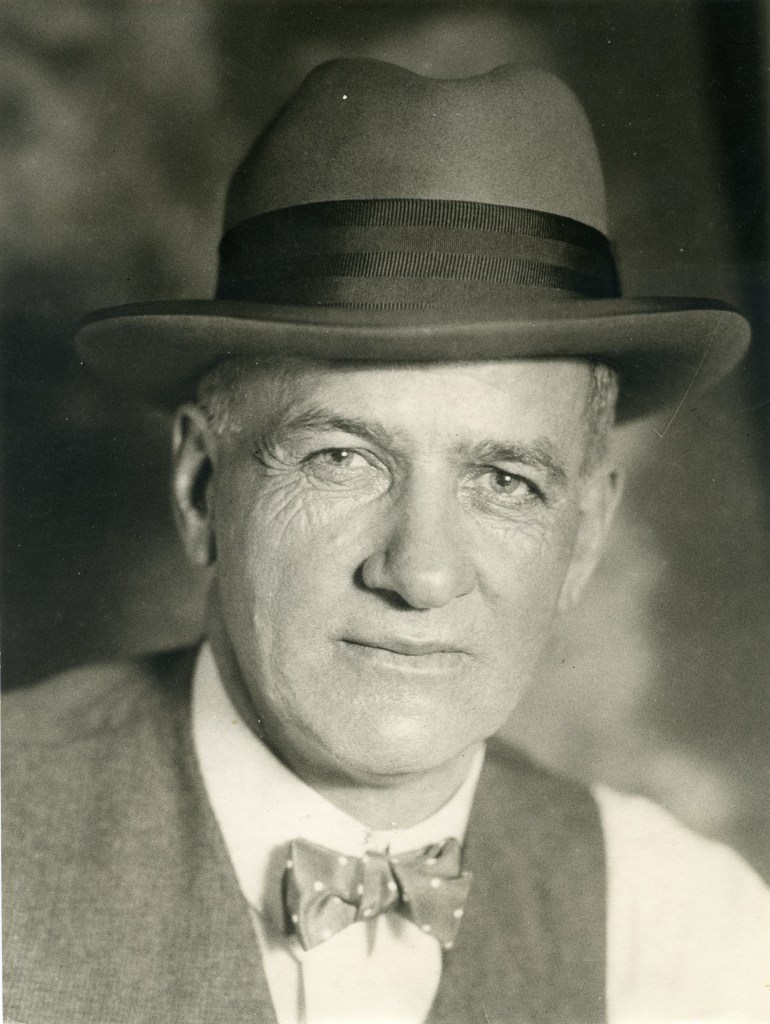
Sure enough, the judge hit the editor with a second contempt charge a few days later for the “Never Slipped a Cog” column. Magee was defiant. In a column headlined “Behold, Now Is the Day of Salvation,” he called on the legislature to go into special session and impeach Leahy.
The next day, Clarence Roberts, one of the special prosecutors, filed a complaint with the bar association in Las Vegas against Hanna, charging his former Supreme Court colleague with “conduct unbecoming an attorney.” The accusations stemmed from Hanna’s appearances at the Las Vegas banquet and the Albuquerque rally. A three-member committee stacked with GOP loyalists was named to investigate. “I am indignant beyond words at this personal insult to the Judge (Hanna),” Magee wrote. “But these gangsters do not know how to hit above the belt.”
Magee was sentenced the following day on the libel charge. He published a full transcript of Leahy’s typewritten speech. The judge ordered Magee to stand and asked if he had anything to say. “Nothing whatsoever,” the journalist responded. The judge then recited the history of Judge Parker, who was first appointed to the bench by President William McKinley, and likened Magee’s comment about Parker to McKinley’s assassination:
More than twenty years after McKinley’s life was snuffed out by the bullet of an assassin, you cowardly, wickedly, wantonly, falsely and maliciously attempt to assassinate the character of Judge Parker and destroy the reputation which he has built up in good conscience by many years of faithful, efficient and honest public service, and you do so in the name of liberty—liberty of the press. You evidently mistake liberty of the press to mean license to vilify and abuse with no regard for the truth . . .
In my opinion, you, and others of your kind, and thank God, they are mighty few, are a greater menace to civilized society, to the lives and liberties of the people generally, than is the cow thief or horse thief.
Leahy then sentenced Magee to from one year to eighteen months of hard labor in the penitentiary, with an appeal bond set at $1,000. The judge also handed the newspaper man another contempt charge and ordered Hanna to appear to show cause why he should not be suspended from practicing law in San Miguel County. The Tribune responded by publishing a form on the front page that readers could use to petition the governor to call a legislative session to impeach Leahy.
The following week the newspaper got a telephone call warning that any further mention of the case would be brought to Roberts’s attention for further charges. Because Magee had filed a notice of appeal, his case now was pending before the Supreme Court. So, anything he wrote could be considered contempt of that court, too. Magee said he had “profound respect” for the Supreme Court, but he would not stop writing about the case.
He would not stop speaking about it either, and Roberts dispatched stenographers to stalk him as he made public appearances. The crowds he attracted reflected the intense interest the public had in newspapers at a time when radio, still in its infancy, was the only alternative medium. On the Fourth of July, the editor addressed 3,500 in tiny Elida, with an eavesdropping stenographer capturing every word. Magee spoke to a crowd in Portales then filled the “largest room available” in Clovis. On July 5, some three thousand people turned out for another rally in Albuquerque, this time at the Armory. More than $7,000 was raised to buy Tribune securities.
During the meeting, Magee invited Roberts’s stenographer to come up on the platform and take notes there. The editor joked that the women of Las Vegas would risk contempt charges if they made food for him after he was in jail. Hanna spoke, too, committing to invest $250 in the Tribune and saying he would work for free as Magee’s attorney.
When Las Vegans planned another community meeting to protest the waste of court funds, Roberts warned the organizers that anyone attending risked a contempt-of-court citation. “The people of San Miguel, it seems, have lost their constitutional right of assembly and petition for the redress of grievance,” Magee wrote. Despite the threat, citizens packed the Las Vegas opera house. A band played patriotic airs, and the attendees sang “Onward Christian Soldiers” and “The Battle Hymn of the Republic.”
Hanna was notified of two more informations seeking his suspension from practice, and Magee learned he would be tried for contempt first for his “Behold” column, which called for Leahy’s impeachment. The Tribune reprinted the allegedly contemptuous article for readers to consider. In it, Magee declared his “inherent respect for the courts amounting almost to awe” but said that “the secret of Sec. Romero’s copper-riveted machine in San Miguel county is his influence over the district court.”
Magee and Leahy shared similar backgrounds. Like Magee, the judge was born in the Midwest (Illinois), trained as a teacher (Valparaiso Normal School), and served for a while as a school superintendent (Colfax County, New Mexico) before hanging out his shingle as a lawyer. Leahy had come to New Mexico in 1898, and like many New Mexicans, he served in the Rough Riders. He was wounded in Cuba and rewarded for his service with an appointment as federal district attorney. He was elected judge in the first election after statehood.
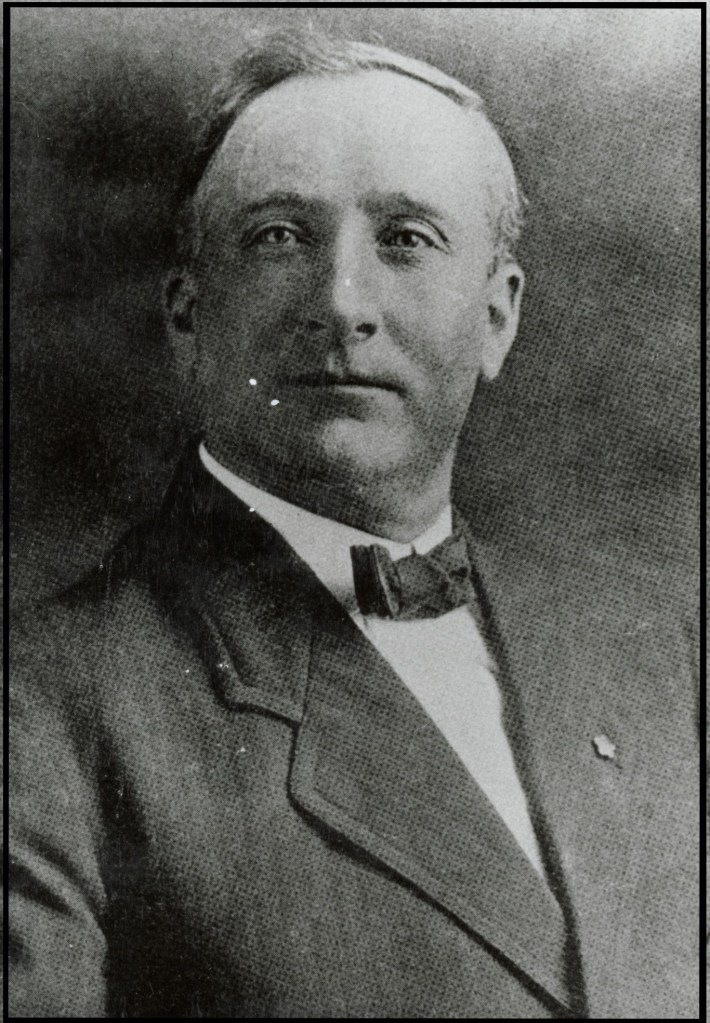
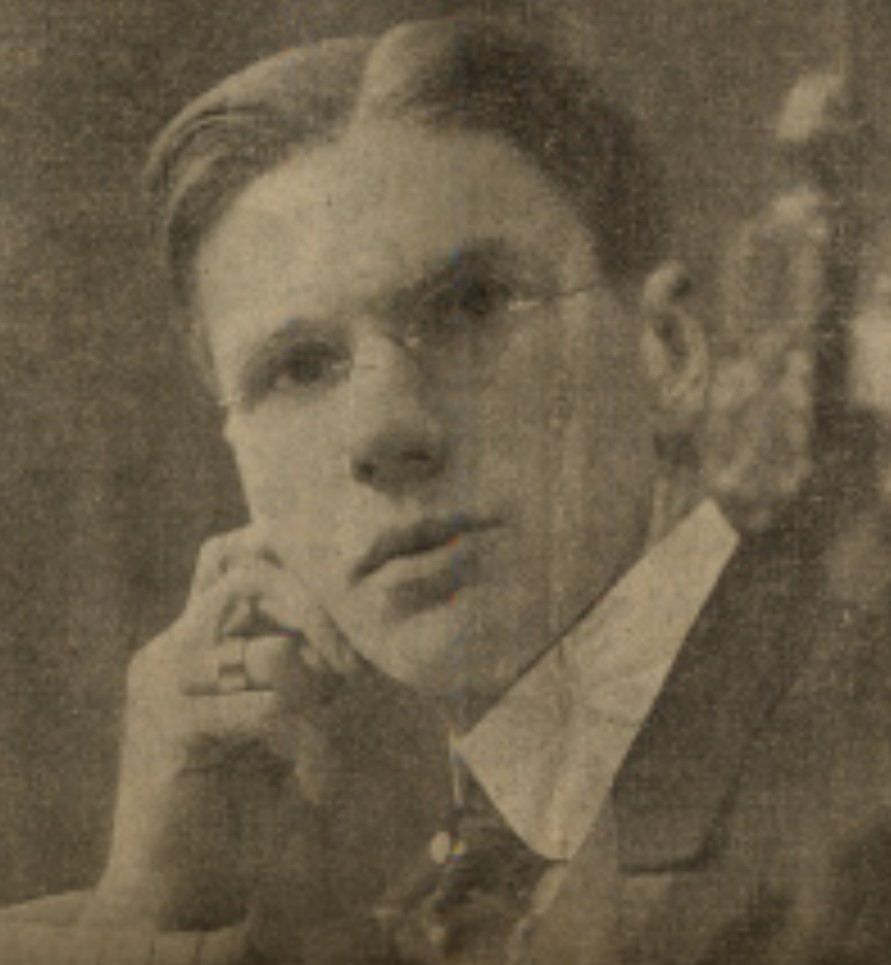
Among the eyewitnesses to events that summer was a budding scholar. Milton C. Nahm had grown up in Las Vegas and worked as a reporter at the Las Vegas Daily Optic before going away to college. He eventually would earn a doctorate, win a Rhodes Scholarship, and write several books on philosophical topics. In 1923, though, he was nineteen years old and getting a crash course on justice, the rough kind. Recruited back into service at the Optic, he was assigned to cover the Magee trial. Years later, he detailed the experience in a memoir that drew on his own records and recollections, as well as the observations of his shrewd and cynical Uncle Joe.
Nahm offered a vivid description of the judge:
Leahy would serve admirably as one pattern for the nineteenth-century Western man. He was physically a giant. He stood well over six feet in height and was built like the amateur boxer he had been in his youth. His big body was topped by a massive head covered with a heavy shock of white hair. . . .
He gave the impression of a violence which lay not far below the skin. He gave this impression even when he was presiding, but the violence had erupted only when he was away from the courtroom. I once witnessed this tendency break into the open at the Duncan Opera House, when Leahy slapped the face of a man with whom he was debating the merits of the League of Nations.
The philosophy professor then quoted his Uncle Joe’s assessment of Leahy’s attitude toward justice: “I ain’t saying that Old Dave knows beef from a bull’s ass about the law, nobody ever figgered he did. And nobody’d claim the Judge knows his ass from his elbow about justice. Leahy wouldn’t recognize it if he saw it walking down Douglas Avenue. But what he says goes and Magee’ll find out.”
When the editor arrived in Las Vegas for the start of his contempt trial, a deputy sheriff served him with a fourth warrant charging him with contempt. Hanna pleaded with Leahy, “My colleague and I have had no time to read the indictments with care. One we saw for the first time an hour ago.” But Leahy denied the motion to postpone and proceeded to empanel the jury, which turned out to be much like Magee’s previous jury.
The defense wanted to present a series of articles that supported the claims made in the “Behold” column, but the judge refused to allow them to be introduced. Instead, Magee’s team would have to offer direct evidence that Leahy was the tool of a political machine. “Of course we cannot make direct proof on that question and they know it,” wrote Magee. “Judge Leahy will not admit that Sec. Romero controls him and Sec. will not admit that he controls Judge Leahy.”
The courtroom was jammed when Magee took the stand. Spectators crowded doorways and aisles. Hanna got things started by asking the editor whom he meant when he referred to Romero’s “copper-riveted” machine. “I meant Sec. Romero, Sheriff Lorenzo Delgado, Judge David J. Leahy and O. O. Askren as the main part with a large array of county officials as satellites,” Magee answered. On cross examination, Askren bored in: “You meant that Judge Leahy was controlled by Sec. Romero?” “Yes, sir. I have reached that conclusion from observation of a long list of events,” said Magee. He cited Leahy’s attending the 1920 Republican state convention in the delegation led by the San Miguel boss. “I was shocked when I learned that Judge Leahy was chairman of that convention, and more shocked when the convention ended with the deal Judge Leahy engineered, making Mechem the nominee. I was surprised to see a district judge work so closely with a political machine leader, I considered such conduct highly reprehensible.”
The editor described how the judge had cut a rancher’s taxes from $150,000 to $11,000, adding, “This led me to believe that a copper-riveted machine was a good thing to belong to if you wanted your taxes reduced.” Applause broke out, and Leahy ordered the sheriff to eject the next person who made a disturbance. Magee said he also knew of four or five other men who had been railroaded on contempt charges in Leahy’s court, citing the case of A. A. Sena, who was indicted one day and tried the next. Magee’s team wanted to introduce auditor reports showing that thousands of dollars went missing from county offices while the court made no attempt to investigate, but the judge ruled the reports were irrelevant.
Magee reveled in being on the witness stand. During a recess, he dashed off a column. “I am much obliged to Mr. Askren,” he wrote. “Askren has no better judgment than to quiz me on my articles and is giving me a chance to get my reason for resisting Judge Leahy into the records. I hope he keeps it up all the afternoon.”
The evening of the second day of the trial, the tension inside the courtroom boiled over when Askren and Wilson met on a Las Vegas street. Askren made a remark, Wilson responded, and the prosecutor struck the defense attorney. A “rough and tumble fight ensued.” Witnesses said Wilson pinned Askren to the ground then let him up. But when Askren rushed Wilson again, “he took a firm grip on his adversary and held him until the police arrived.” The two lawyers—a former state attorney general and a future one—were arrested. In police court the next morning, Askren asked that no charges be brought against Wilson. “It was my fault,” said the prosecutor. “Wilson was joking with me and I struck him. He threw me to the sidewalk and held me. He is a gentleman and I do not want anyone to think he is a rowdy even if they do think I am.” The court dismissed Wilson and announced it would fine Askren ten dollars. Then Wilson spoke up, saying he understood why Askren assaulted him and “it will serve no purpose to me to have Mr. Askren fined.” The court dismissed both cases.
The defense tried to call Secundino Romero as a witness. He could provide direct evidence about the operations of his political machine. But he was said to be out of the state in El Paso, a claim that was greeted with skepticism. “Romero is in hiding,” Hanna stated. “I know that he is not far away.” In fact, Romero was believed to be lurking in his office in the courthouse. But he was more valuable to the defense as an elusive foil than as a reluctant witness. As Nahm told it:
They had made their point about Romero’s absence, and it merely emphasized Leahy’s presence. What took place thereafter between the defense lawyers and the Judge resembled nothing so much as a bear-baiting. When his tormentors got too close, Leahy dragged out the old lead pipe, the charge of contempt of court. Hanna began to shake his head at the threat latent in Leahy’s rulings. He also began to exaggerate a gesture he habitually made, owing to a slight deafness. It was clear that Hanna wasn’t too hard of hearing to understand everything Wilson or Magee or an important witness said, but when the Judge spoke, Hanna cupped his ear with his hand and made some show of straining to catch His Honor’s words.
The “bear-baiting” came to a head when the defense probed an automobile accident that killed a pedestrian on the Fourth of July four years earlier. The dead man’s widow took the stand. She swore that Leahy was in the car when Postmaster M. M. Padgett ran down her husband. No charges were brought because of the men’s political clout, she said. Prosecutors responded by calling a friend of Leahy’s, who testified that it was he, not the judge, who was riding with Padgett. But Hanna called another witness who corroborated the widow’s testimony. Was the judge intoxicated? Hanna asked. Leahy stopped the questioning there. “The witness has deliberately committed perjury,” he said. “I was not in that car.” The exchange sparked a shouting match between Hanna and Askren that brought deputies running. Askren insisted that Hanna be cited for contempt. Hanna defended his questions, saying he wanted to show “how the ‘copper-riveted machine’ functioned.” The judge “was in the grip of a towering rage,” according to Nahm, but he controlled his fury and asked the court clerk to read back Hanna’s statements. Then he told Hanna, “You have overstepped all bounds. Your conduct is grossly contemptuous. I adjudge you guilty of direct contempt.”
Leahy then called for a recess, and as he stepped down from the bench, Magee rose. It looked as though the two men might both be headed for the grand jury room where the water-cooler stood. Sheriff Delgado stepped up to Magee, laid a hand on his arm, and spoke a few words. Then he sent a deputy to fetch a glass of water for the editor. A physical confrontation was avoided—for now. But Magee’s headline question—“Who Is on Trial?”—had an answer that was apparent to all in the room. In the court of public opinion, Leahy was in the dock.
The trial ended on Friday, July 13. Leahy found Magee guilty of contempt, sentencing him to one year in jail and imposing a fine of $4,050 on the Tribune. An appeal bond of $6,000 was set. Leahy spent nearly forty-five minutes delivering his judgment. The defense came away with one victory. The judge allowed the contempt charges to be consolidated, so the sentence applied to all four cases. But Magee was handed a new contempt charge. That way, a case still would be pending against him in Leahy’s court, so he would remain in jeopardy of further contempt charges.
That afternoon, the Tribune ran a two-column box in the center of page 1 where Magee’s column normally appeared. In large, italic type, under the headline “UNINTIMIDATED,” it read, “I have not had time to write a box today. The fight for freedom to criticize corruption in high places will go on without modification.”
Las Vegas native Nahm reflected on the local sentiment, quoting his Uncle Joe’s reaction to the trial: “The boys in the backroom of the Lobby was betting five-to-one . . . that Magee’d never walk out of the courthouse alive. They even bet the day it’d happen. Best odds was on the last day of the trial. Maybe it’d have saved trouble if they could have pulled it off. Anyhow, we ain’t finished with this one yet.”
From Citizen Carl: The Editor Who Cracked Teapot Dome, Shot a Judge and Invented the Parking Meter published by University of New Mexico Press.

 Jack McElroy Books